Genre
Synopsis
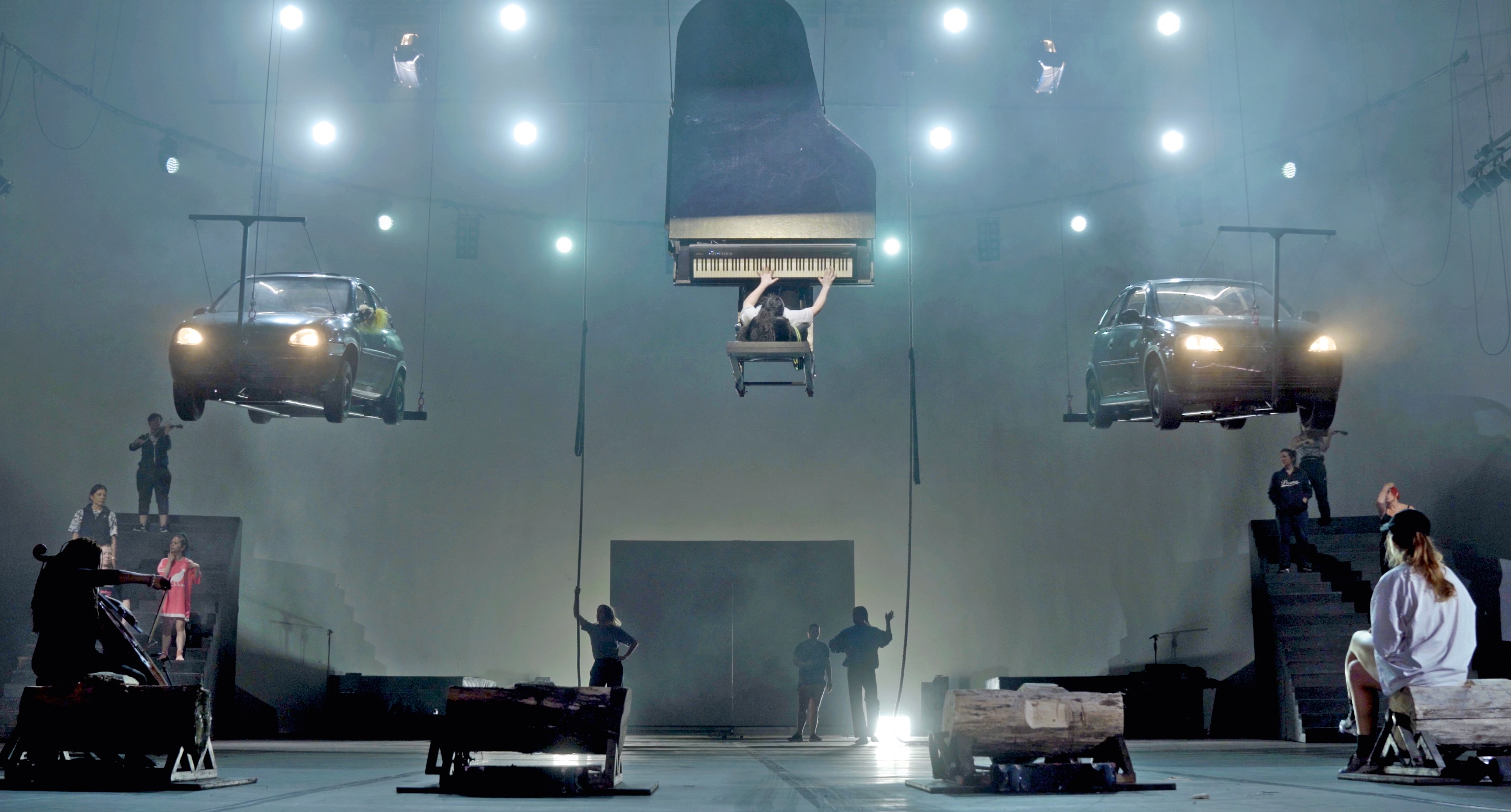
FLORENTINA H. is a poetic documentary that follows choreographer Florentina Holzinger, who inspires and divides audiences with her radical performances. Her productions are physical, spectacular, sensual, and raw. In her work, she plays with pop culture clichés and scrutinizes existing gender and age roles with her international ensemble. Real and fake blood, piercing, and self-inflicted wounds are frequent elements. Her productions often lead to audience members fainting, yet consistently end in standing ovations. While some criticize her work for its shock value, this film offers a first glimpse into Florentina's unique creative process.
Blending intimate behind-the-scenes verité footage with carefully staged dream-like sequences, the film explores themes including the use of the body as artistic medium, death, risk, and community, aiming to capture the poetry of existence. While confronting controversial questions, the film stays away from didactic explanations. One of the director's first meetings with Florentina was postponed because she had to be rushed to the dentist. Later, Florentina revealed that almost all her teeth were about to fall out because she hangs herself from the mouth so frequently. Another person might stop, but she seemed merely annoyed at her "delicate" body. This incident sets up the central theme of the film: the body as a working tool that must be disciplined and trained. Holzinger's ensemble is composed of a diverse crew: classical dancers, athletes, artists, circus performers, sex workers, stunt people, and musicians crossing over from classical to noise artistry. These women make up the backbone of the film. As the film begins we meet each of them, including: Annina Machaz, a Swiss actress who transforms nightly into a clown of sorts; Sophie Duncan, an English pole dancer who resolved that being unclothed on stage was simply another kind of costume; Xana Novais, a Portuguese dperformer whose motto is "my fears are my ambition"; Netti Nüganen, an audacious performer ; Renée Copraij, a Dutch dancer and dramaturg who worked with Jan Fabre for 20 years and has been a long-time creative collaborator; Luna Duran, an American-Bolivian performer and body piercer who guides the ensemble through the world of suspension; Fibi Eyewalker, a sword swallower; and Trixie Cordua, 81, a former soloist with the Hamburg Ballet who worked with Merce Cunningham and Pina Bausch, and who has Parkinson's disease and sometimes moves on stage with the help of a motorised wheelchair.
A central chapter follows the creation of Sancta, a production that blends opera with metal and pop on prestigious European stages. The production sparked significant controversy, with sensationalist coverage spreading internationally and leading to the harassment of collaborators.
The narrative explores how their different shows are received in NYC, and Paris at a time when there's intense political tension regarding bodily autonomy. The film builds toward a monumental moment: representing the Austrian Pavilion at the 2026 Venice Biennale with SeaWorld Venice. The mystery of what the show will become provides a forward drive and a feeling of real-time discovery.